The Quiet Scramble Around Iran: Trump’s Warning, Gulf Anxiety, And The New Middle East Taking Shape
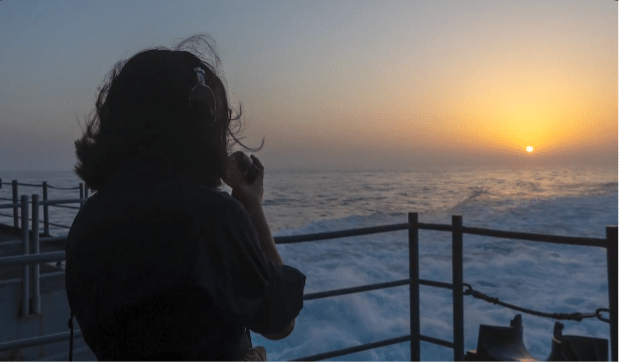
Arabian Sea: A still image from a video released by United States Central Command (CENTCOM) this week captured the mood of the region better than most official statements could. A U.S. naval officer staring toward the Strait of Hormuz. Calm on the surface. High tension underneath. [Source: @CENTCOME post on X]
Welcome to BACKCHANNEL, a newsletter by American Jewish Congress. If you were forwarded this email from a friend, sign up here to receive this weekly.
While headlines focused on President Donald Trump warning Iran that the “clock is ticking,” a regional scramble is now underway behind the scenes.
President Trump stopped an imminent resumption of the war on Iran on Tuesday following a request by Saudi Arabia, the United Arab Emirates (U.A.E.) and Qatar to give last-ditch peace efforts a chance.
Meanwhile, Iranian state TV is offering live classes on how to use personal firearms, hoping citizens will step up to defend the regime in case of war, while the Pakistani interior minister returned to Tehran after spending much of the weekend and early this week there — reportedly without a formal Iranian invitation — hoping to persuade the regime to accept American demands.
Here’s what you might want to keep an eye on.
Iran’s Latest Offer: End The War Now, Delay Everything Else
- Iran’s latest proposal, according to leaks aired by Saudi outlet Al Arabiya citing Iranian official sources, appears designed to secure sanctions relief, reopen the Strait of Hormuz, and lock in a long ceasefire now, while pushing any real negotiations over missiles, proxy militias, and the nuclear program into the future. Tehran reportedly offered only a temporary nuclear freeze, transfer of enriched uranium to Russia, and mediation through Pakistan and Oman. The message is clear: de-escalation and economic breathing room first, the hard concessions later.
… While Iran State TV Teaches Combat To Citizens
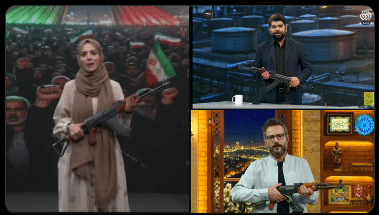
- Iranian state TV has begun airing civilian combat tutorials, including weapons training using what appears to be East German-made MPi-KMS rifles, an AK-47 variant. See screenshots from Iranian TV broadcasts last week, including footage of a volunteer firing at the flag of the U.A.E., a Gulf state allied with the United States and Israel.
Like what you read? Sign up here to get it weekly, straight to your inbox→
Iran’s New Leader’s Photo Is Missing On The Wall
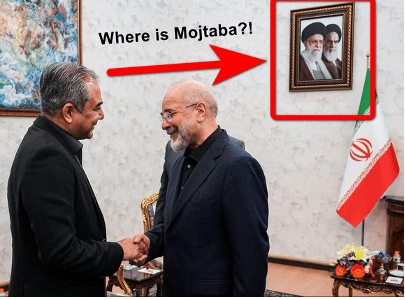
- Uninvited Guest? The Pakistani interior minister Mohsin Naqvi landed in Tehran, Iran’s capital, on Saturday to convince the regime to return to the negotiating table in Islamabad, the Pakistani capital. He was still there on Monday, extending the visit (likely without the Iranian hosts requesting him to do so). In fact, the regime’s official wire service did not know how long the Pakistani minister intended to stay when it filed the story.
- Where’s Mojtaba? The biggest statement from the visit may have been unspoken, in an official photo released by the Iranian regime, where Iranian parliament speaker Ghalibaf received the Pakistani guest. The wall behind Ghalibaf did not have the new supreme leader Mojtaba Khamenei alongside the framed photo of his father, Ali Khamenei, eliminated by Israel on the first day of war. [Ghalibaf, seen on the right in the photo above, was the main interlocutor with U.S. VP JD Vance in Islamabad Talks last month].
… Pakistan Is Also Helping Saudis Prepare To Fight Iran In Case of War
- In an exclusive report published this week, Reuters revealed for the first time that Pakistan has deployed roughly 8,000 troops, fighter jets, and air defense systems to Saudi Arabia, a substantial combat-capable force intended to help defend the Kingdom in the event of major Iranian attacks.
A Glimpse Into Saudi Thinking: End The War, Keep The Pressure
- One of the clearest windows into current Saudi thinking came not from officials, but from Faisal J. Abbas, editor-in-chief of Arab News, who says he regularly attends Saudi background briefings. He reports something subtle but important: Riyadh’s immediate priority is reopening the Strait of Hormuz and preventing regional economic disruption. Only afterward would broader discussions resume on Iran’s missile program, proxy militias, and long-term regional security arrangements.
- The article also revived a long-running Saudi frustration with the Obama-era nuclear deal: that Iran’s missile network and regional militias were never seriously addressed. That critique is quietly resurfacing again across the Gulf.
Iran’s Regional Pressure Network Remains Active
Even as diplomacy continues, the region is being reminded why Gulf states remain deeply skeptical of Iran’s intentions.
Over the weekend:
- Iranian-aligned militias attacked the United Arab Emirates and Saudi Arabia.
- Iraqi militias threatened Kuwait.
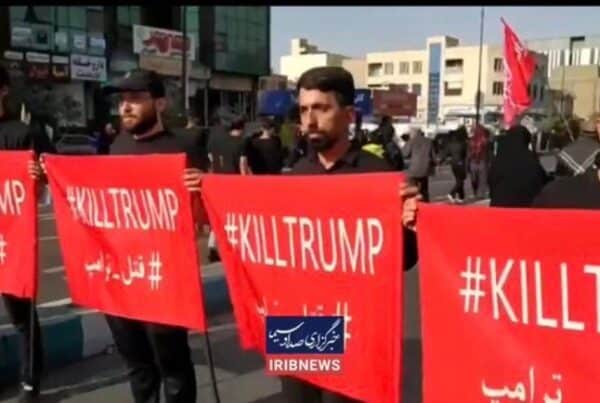
- Iranian state-affiliated media figures openly discussed calls for violence against President Trump.
For Gulf Arab states, this is not an abstract debate. It is a security reality they have lived through directly.