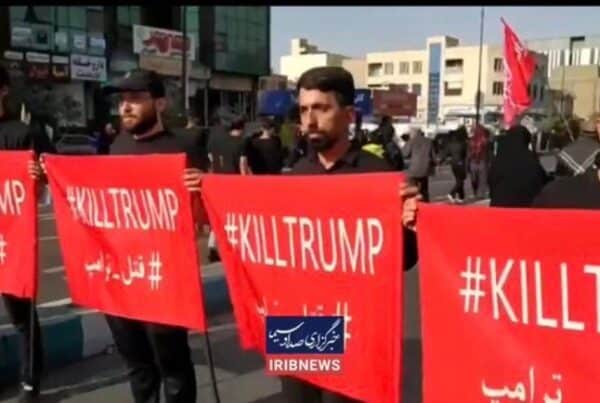

The Achievement. President Trump, working closely with Israel, fundamentally changed the strategic balance with Iran. Tehran entered negotiations after suffering its biggest military setback in decades.
The Challenge. Winning a war is one thing. Turning that victory into a durable regional settlement may prove even harder.
The Debate. Across Washington, Jerusalem, and the Gulf, the question is no longer whether Iran was weakened. It is whether diplomacy will preserve those gains without allowing Tehran to rebuild.
The Next Phase. This week, we look at where the negotiations really stand, what happened behind the scenes in Switzerland, why Secretary Rubio’s Gulf mission matters, and the signals the White House is sending to both allies and critics.
Let’s get into it.
FIRST, WHERE THE IRAN TALKS STAND NOW
The Next Stop. Switzerland was the opening round. Attention now shifts to Doha, where U.S. representatives are expected to continue testing whether Iran is serious about turning the ceasefire into something more durable. The real negotiations are only beginning.
Trump’s Warning. Over the weekend, President Trump responded to new Iranian ceasefire violations with one of his sharpest warnings yet. After announcing U.S. strikes on Iranian missile and drone storage sites and coastal radar positions, he warned that if Washington is forced to “complete the job,” the Islamic Republic of Iran “will no longer exist.” Forget diplomatic niceties. The President went for the language of deterrence, which is what the moment called for.
The Message. The President is trying to hold two lines at once: keep diplomacy alive but make clear that Iran cannot use the talks as cover to test American resolve in the Gulf, threaten shipping, or rebuild leverage.
Iran’s Game. Tehran, meanwhile, is still saying different things to different audiences. U.S. officials describe progress on inspections and implementation. Iranian officials keep denying or narrowing what was supposedly agreed. That gap remains the problem.
Hormuz Still Matters. The administration is also pointing to resumed traffic through the Strait of Hormuz as evidence that pressure and diplomacy are producing results. But the weekend’s flare-up showed how quickly Iran can try to use shipping lanes as a bargaining chip again.
The Bottom Line. The ceasefire is holding, but not comfortably. Washington now has to turn battlefield pressure into enforceable commitments, without allowing Iran to pocket relief, stall inspections, and return to its old habits.
Rare Bipartisan Concern. The White House and the Administration are in overdrive to stem the negativity around the Memorandum of Understanding with Iran, which has united some Republicans and Democrats in criticizing it. As CNN notes: “In Washington, there’s rare bipartisan concern that the president gave too much away to make the agreement, along with doubts that it will last, despite relief that fighting could end permanently.”
RUBIO’S GULF MISSION AS ARABS WORRY ABOUT EMBOLDENED IRAN
The Mission Continues. Rubio’s conversations in the Gulf are now feeding directly into the next negotiating round. His challenge remains the same: reassure partners that diplomacy will lock in—not dilute—the strategic gains achieved during the war.
Secretary of State Marco Rubio arrived in the Gulf just before the weekend with a difficult mission: convince America’s Arab partners that a deal with Iran will make the region safer, not simply give Tehran time to recover.
Arabs Been Blunt. Gulf Arab concerns are not hypothetical. In a joint statement last week, the foreign ministers of Saudi Arabia, Egypt, Pakistan and Turkey explicitly said any final agreement must account for the security and stability of Gulf Arab states and the wider region. Saudi Foreign Minister Faisal bin Farhan separately stressed that verification would be critical to any durable deal.
The Good News. Most Gulf governments support the White House in effort to end the war. Nobody wants another regional conflict, another disruption to shipping, or another crisis in energy markets.
The Skepticism. But ending a war and rewarding Iran are not the same thing. Across the Gulf, officials worry that Tehran may emerge from the negotiations with relief, new revenue streams, and greater diplomatic legitimacy without fundamentally changing its behavior.
The Memory. Arab officials have seen this movie before. Many still believe nuclear diplomacy focused too narrowly on centrifuges while ignoring missiles, proxy militias, and regional interference. Those concerns have not disappeared.
The Question. The real debate is no longer whether there should be a deal. The debate is what kind of deal. Gulf states want to know whether new economic breathing room for Tehran will be matched by meaningful limits on the very activities that destabilized the region in the first place.
The Test. Rubio’s challenge is therefore straightforward but difficult: persuade allies that the administration’s strategy is not merely producing a ceasefire but creating a framework that prevents Iran from rebuilding the military, financial, and proxy networks that brought the region to the brink of war.
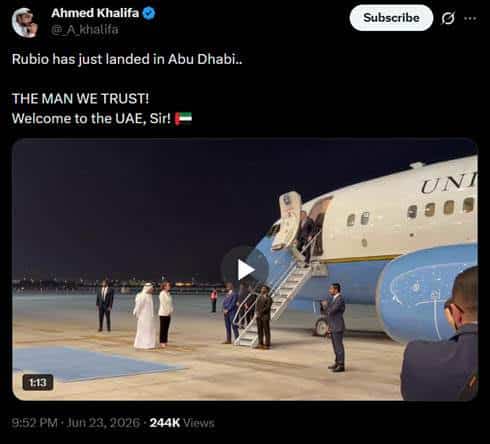
The Arab Mood? When Rubio landed in Abu Dhabi, a prominent Emirati influencer, Ahmed Khalifa, posted a video clip of him emerging from a plane on the tarmac with the text: “Rubio has just landed in Abu Dhabi… THE MAN WE TRUST!”. What he meant is that, in the Gulf, some trust Rubio more than others in the Administration because he is not negotiating concessions for Iran.
TRUMP AND VANCE ARE COOLING THE ISRAEL PANIC
Something else happened this past week that deserved more attention.
Israel Criticism. For days, critics argued that Washington was drifting away from Jerusalem, that the Iran talks would come at Israel’s expense, and that President Trump was losing patience with Prime Minister Netanyahu.
Bibi The Warrior. Then Trump called Netanyahu a “warrior prime minister” and said he deserved credit for Israel’s role in the campaign against Iran.
Vance Defends Israel. Vance sent a similar message in Switzerland. While defending diplomacy with Tehran, he also argued that military pressure helped create the conditions for negotiations.
The Signal? Washington wants a deal with Iran, but it is not framing that deal as a break with Israel.
RECAP: THE DRAMA IN SWITZERLAND
The 60-day window to reach a deal kicked off just over a week ago. But let’s be honest: the opening day of the talks in Switzerland was anything but smooth.
It was a mess: … and theatrical. And it told us something.
The Snub. Iranian Foreign Minister Abbas Araghchi appeared to brush past Vice President JD Vance during the opening moments. Cameras caught him instead leaning toward Pakistani Prime Minister Shehbaz Sharif for a brief exchange before leaving the hall. Diplomats will argue over what exactly happened. What matters is the signal: Tehran wanted everyone to know it was not arriving in a mood for pleasantries. [Reuters wire service described the moment when Araghchi briefly embraced Pakistani Prime Minister Shehbaz Sharif and left without publicly interacting with JD Vance. Two clips captured the moment and went viral: angle 1, and angle 2]
The Marathon. The mood was different behind closed doors. Vance later revealed that the two sides spent eight to nine hours in direct discussions. That is a remarkable amount of time for adversaries who, only months ago, were exchanging missiles and threats.
The Optimism. VP Vance struck an upbeat tone in his press conference [at Burgenstock resort in Switzerland, the venue of the talks]. His message suggested that enough progress had been made to justify continued engagement. The atmosphere briefly shifted from crisis management to cautious possibilities.
The Reality Check. Speaking to reporters before departing Geneva airport, Vance noticeably lowered expectations. The optimism remained, but the certainty did not. Iranian ceasefire violations into the weekend confirmed everyone’s worst fears about Iranian intentions.
The Contradiction. Within hours, Iranian officials appeared to walk back parts of what many observers believed had been discussedregarding nuclear inspections and monitoring. The gap between public statements and private conversations remains wide.
We’re following the possible U.S.-Iran talks in Doha today [still in limbo]. Follow us on social media for our take on developments.