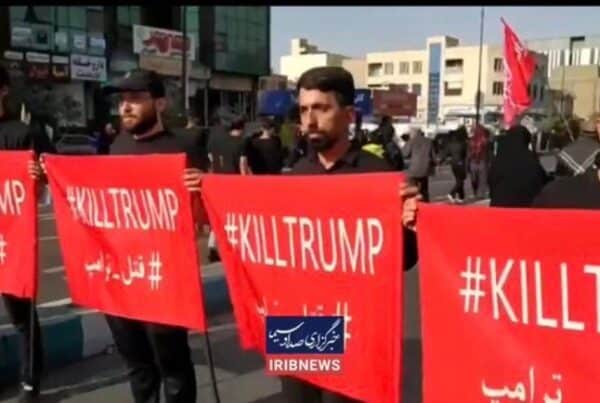


UNBELIEVABLE SCENES IN BEIRUT. The Lebanese army closed access to the Christian neighborhood of Chiyah in the capital, blocking Hezbollah sympathizers from seeking refuge there. In other words: Christian neighborhoods are being sealed off so Hezbollah supporters cannot flood into them if a strike happens. A Lebanese soldier can be seen to the left, manning barbed wires that block a road that goes into the Christian neighborhood. [Source: @MOSSADil post on X]
Welcome to BACKCHANNEL, a newsletter by American Jewish Congress. If you were forwarded this email from a friend, sign up here to receive this weekly.
Lebanon: Who controls Lebanon? This week, we look at the quiet battle over Lebanon unfolding in Washington, Jerusalem, and Tehran.
Rubio: Secretary of State Marco Rubio testified before Congress for the first time since the Iran war and offered important clues. We go behind the scenes. You don’t want to miss this insight if you care about how this war ends.
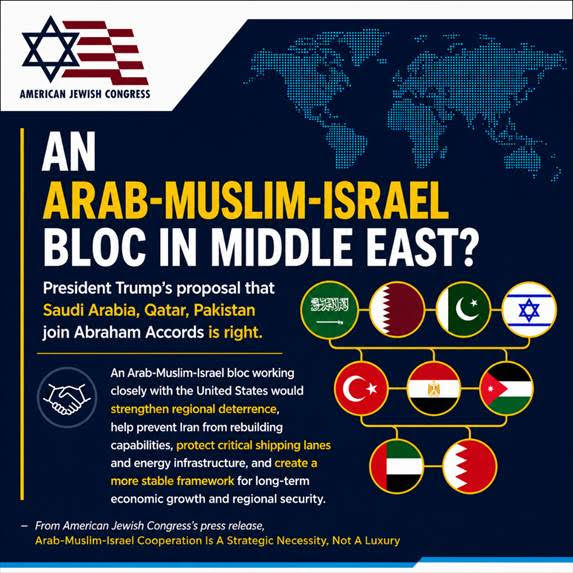
Abraham Accords: And President Donald Trump tells it like it is to our Arab-Muslim partners: time to expand ties with Israel. We explain why now, even if it won’t be easy getting there.
Let’s get into it.
FIRST, WHAT RUBIO REVEALED ABOUT THE U.S. APPROACH TO IRAN
Secretary of State Marco Rubio used congressional testimony this week to provide perhaps the clearest explanation yet of how the administration views the Iran crisis and the logic behind recent U.S. military action.
Worth watching (the part about Iran). But you’re covered if you’re reading this.
Secretary Rubio’s message was not primarily about diplomacy. It was about the sequencing strategy of the Trump Administration to tackle the threat from Iran.
Rubio solved a contradiction: military pressure alongside negotiations with Iran. He suggested the administration sees them as part of the same strategy:
– First, weaken Iran’s military leverage.
– Then maintain economic pressure.
– Then test whether Tehran is willing to negotiate limits it previously refused even to discuss.
Why does this matter? Because Rubio was effectively arguing that the recent war was not designed to solve the nuclear issue overnight. It was designed to strip away what he called Iran’s “conventional shield”: the missiles, drones, military infrastructure, and regional proxy network that protected the regime and gave it confidence to resist pressure.
Whether that ultimately produces an agreement remains unclear. But Rubio’s testimony suggests the Administration believes Iran is now negotiating from a position of weakness rather than strength.
The most revealing line came near the end of his remarks, when he said Iran would no longer have “the conventional shield to hide behind.”
In short, Washington believes the military phase of the crisis created the conditions for the diplomatic phase now underway.
ENDING IRAN’S LEBANON CARD
The noise around Lebanon escalated this week, almost overtaking the talk about negotiations with Iran. If you’re wondering why, there’s a good reason.
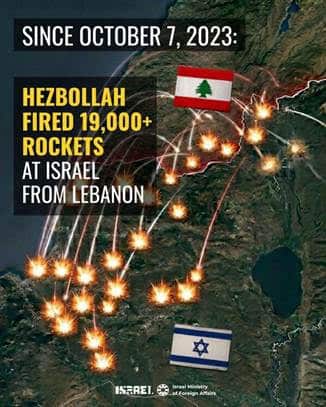
The short story: There is a quiet battle brewing around Lebanon, because Iran has hijacked this country and is using it as a negotiating card in talks with the United States and Gulf Arab states. The regime in Tehran invested in Hezbollah for 46 years. Now the militia has seeped into the structure of the Lebanese state. Everyone is trying to salvage Lebanon and wrestle it from Iran’s hands.
If Iran loses control of Lebanon, this is what happens: Iran won’t be able to blackmail Israel. Thousands of Israeli civilians will return to their homes, and Iran will lose an important card on the negotiating table with America and Arabs.
Weeks of diplomatic attempts by America and Arabs have failed to get the Lebanese government and army to disarm Hezbollah and sever its ties to Iran.
Finally, frustrated and upset at the suffering of displaced Israeli civilians in the north, Israel decided to act, and Israeli Defense Minister Israel Katz made the announcement you see in the screenshot below.
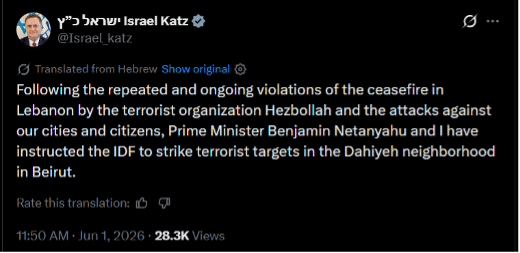
On Monday, Israel prepared to strike Hezbollah targets in Beirut’s southern suburb, Dahiya, the militia’s most important stronghold. After the IDF warned civilians to evacuate, thousands fled the area. The move appears to have alarmed Tehran, which depends heavily on Hezbollah as its most important Arab proxy. Iranian officials reportedly threatened to walk away from talks with Washington, prompting President Trump to intervene and halt the operation.
On the same day, Lebanon unexpectedly became a central topic at the U.N. Security Council. U.S. Ambassador Mike Waltz blamed Iran for the crisis. While Israeli ambassador Danny Danon looked at the Pakistani and Lebanese ambassadors, and the Colombian envoy, and said, “The last three speakers in the room failed to even mention Hezbollah: the Pakistani ambassador, madam president, and the Lebanese ambassador,” and then raised both hands to say, “nobody can actually name it!”.
Amb. Danon’s frustration captured a larger reality: much of today’s diplomacy revolves around Lebanon, but many governments still struggle to openly address the role of the Iranian-backed militia at the center of it.
TRUMP WANTS IRAN DEAL TO INCLUDE ABRAHAM ACCORDS
Nobody saw it coming, but this is big.
The President’s proposal linking an eventual Iran agreement to expanded Arab-Muslim engagement with Israel may be the most consequential development in the talks so far.
What began as a negotiation over war, sanctions, and Hormuz is increasingly becoming a conversation about the region’s future political architecture.
The question is no longer simply what Iran will accept. It is whether key Arab-Muslim states decide to build something larger once the crisis subsides.
Will Arab states do it? There is no shortage of skepticism. And yes, differences remain between Israel and some of its Arab-Muslim neighbors. But as we argued this week in our latest press release, the region’s major pragmatic states increasingly face the same threats and share many of the same strategic interests. The question is no longer whether cooperation makes strategic sense. It is whether leaders are prepared to act and create an Arab-Israel bloc to confront the threats.
Read our full statement HERE.