The American Jewish Congress (AJCongress) played a crucial and transformative role in the Civil Rights Movement, leveraging its influence, legal expertise, and organizational power to champion equality and justice in the United States. Founded in 1918, the American Jewish Congress was initially focused on fighting antisemitism and advocating for Jewish rights. However, it quickly recognized the parallels between the Jewish struggle against discrimination and the African American fight for civil rights, leading the organization to become a pivotal ally in the broader movement for racial justice.
The American Jewish Congress’s involvement in the Civil Rights Movement was pivotal in broadening the movement’s base of support and helping to secure key legislative and judicial victories. By framing the struggle for civil rights as a universal moral issue, the American Jewish Congress helped to galvanize support from diverse communities, including many who might not have otherwise been involved. Its legal strategies contributed significantly to dismantling institutionalized racism, and its coalition-building efforts strengthened the ties between the Jewish community and African American leaders. In doing so, they fostered a lasting alliance between Jewish and Black communities, rooted in a shared commitment to justice and equality.
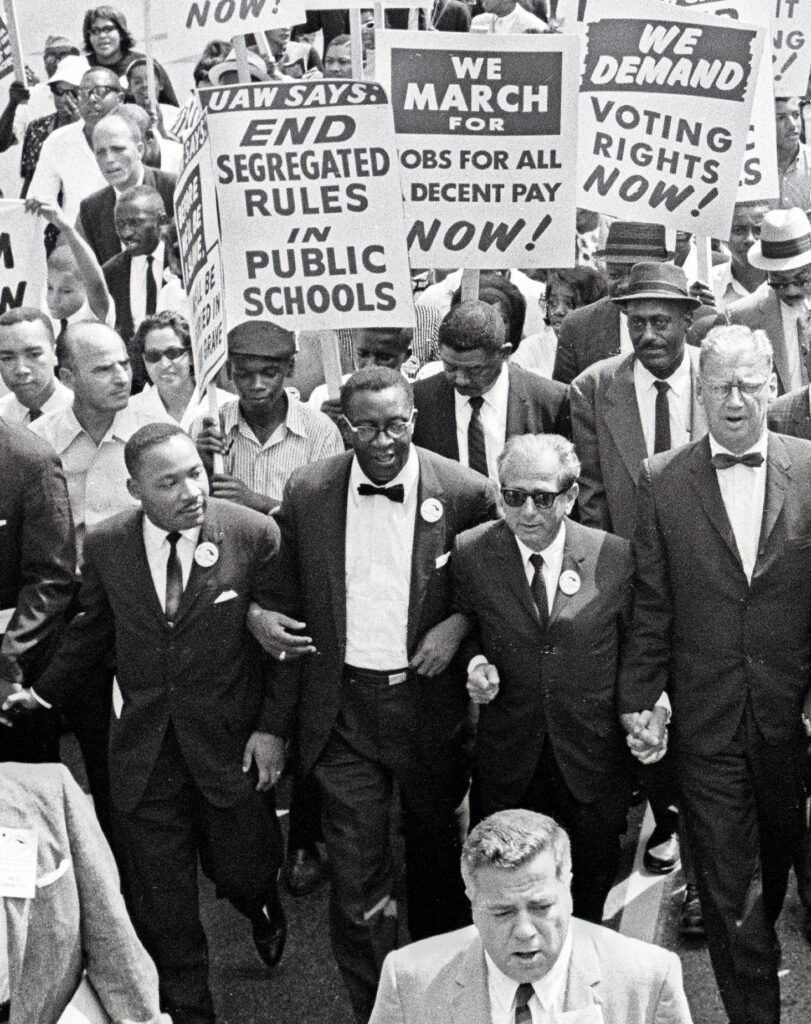
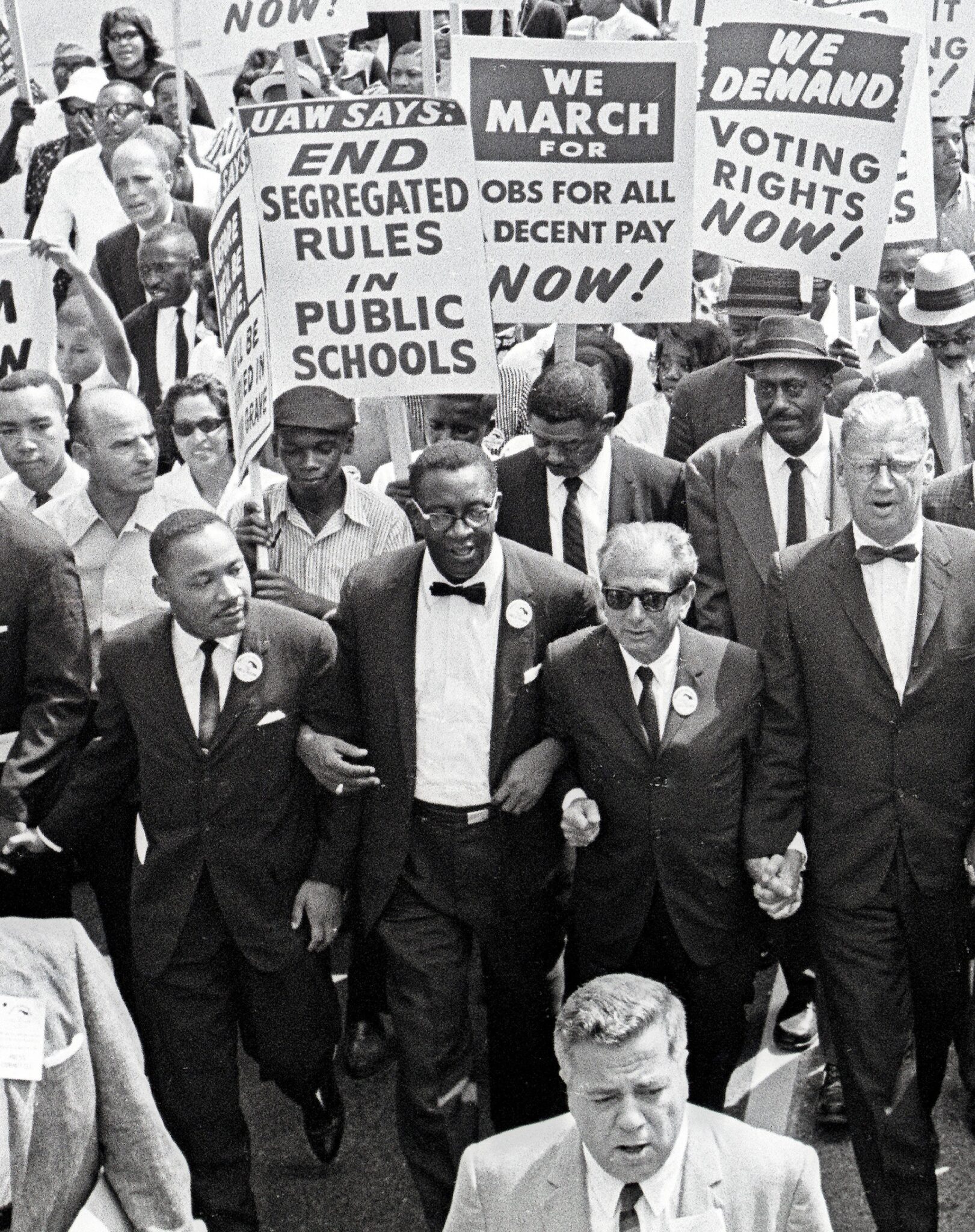
March on Washington for Jobs and Freedom, with Dr. Martin Luther King Jr. in the center and American Jewish Congress President Joachim Prinz second to the left of Dr. King, 1963
Coalition Building:
- Relationship with Dr. Martin Luther King Jr: The American Jewish Congress maintained a close relationship with Dr. Martin Luther King Jr. and other leaders of the Southern Christian Leadership Conference (SCLC). American Jewish Congress leaders, including Rabbi Joachim Prinz, the organization’s President, spoke at key events.
- March on Washington: The organization participated directly in major civil rights events, such as the 1963 March on Washington, where it played a role in organizing the event, addressing the logistical challenges, and most importantly, mobilizing Jewish support and participation. Rabbi Prinz delivered a powerful speech at the March on Washington immediately before Martin Luther King’s legendary “I have a dream” speech.. In his speech, Rabbi Prinz emphasized the shared struggle against oppression.
- Partnership with the NAACP: The American Jewish Congress worked closely with the NAACP, providing legal assistance, and this partnership was crucial in mounting effective legal challenges against segregation and discrimination. For instance, AJCongress leaders often joined NAACP lawyers in court cases, providing additional legal expertise. Moreover, they raised funds to support civil rights organizations and initiatives, including for NAACP’s Legal Defense Fund.
- Founding of the Leadership Conference on Civil Rights: The American Jewish Congress played a significant role in the founding of the Leadership Conference on Civil Rights (LCCR) in 1950. The LCCR became the primary coordinating body for civil rights lobbying and advocacy, bringing together a diverse coalition of organizations.
- Support for Civil Right Workers: During the Freedom Summer of 1964, when civil rights workers faced significant danger in the South, the American Jewish Congress helped to raise money for their protection and legal defense. This support was vital in ensuring that activists could continue their work without fear of retribution.
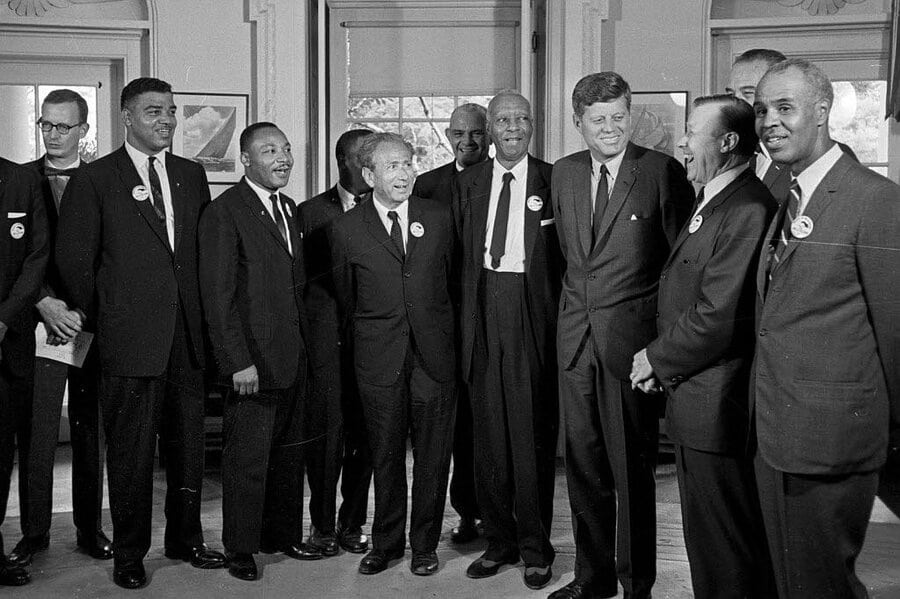
American Jewish Congress President Joachim Prinz (left of Dr. Martin Luther King Jr.) with other leaders of the Civil Rights Movement during a White House meeting with President John F. Kennedy
Legal Advocacy:
- Fighting segregation: The American Jewish Congress used its legal acumen to challenge segregation and discrimination in court. One of its most significant contributions was the filing of amicus curiae briefs in landmark Supreme Court cases such as Brown v. Board of Education (1954), which led to the desegregation of public schools. The American Jewish Congress’s brief argued that segregation was inherently unequal and detrimental to the psychological development of African American children, contributing to the Court’s unanimous decision to desegregate public schools.
- Civil Rights Act: The American Jewish Congress was deeply involved in lobbying for the Civil Rights Act of 1964. The organization’s lawyers worked to draft key provisions of the legislation, which ultimately outlawed discrimination based on race, color, religion, sex, or national origin in employment practices and public accommodations.
- Housing Discrimination: The organization’s legal work extended to fighting housing discrimination, including in Shelley v. Kraemer, where it filed an amicus brief challenging racially restrictive housing covenants. The Supreme Court ruled that such covenants could not be enforced by courts, a significant victory in the fight against housing discrimination. Later on, the organization become a strong advocate and supporter of the Voting Rights Act of 1965.
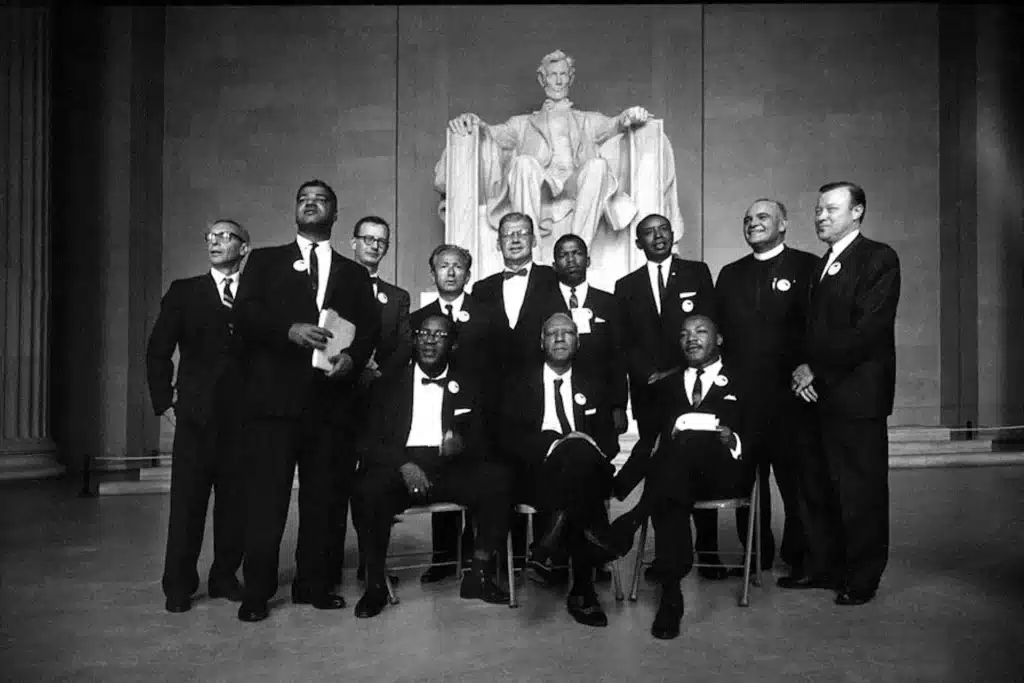
Leaders of the Civil Rights Movement, including American Jewish Congress President Joachim Prinz (standing, second to the left) in front of the statue of Abraham Lincoln in DC, 1963.
Public Education and Advocacy:
- National Committee Against Discrimination in Housing: The American Jewish Congress co-founded the National Committee Against Discrimination in Housing (NCDH) in 1950, which aimed to combat housing discrimination through public education, legal challenges, and advocacy. The NCDH conducted studies, published reports, and organized campaigns to raise awareness about the pervasive issue of housing discrimination.
- Publications and Conferences: The American Jewish Congress published numerous reports, pamphlets, and articles highlighting the importance of civil rights and the need for racial equality. It also organized conferences and seminars that brought together civil rights leaders, legal experts, and community activists to discuss strategies for advancing the movement.
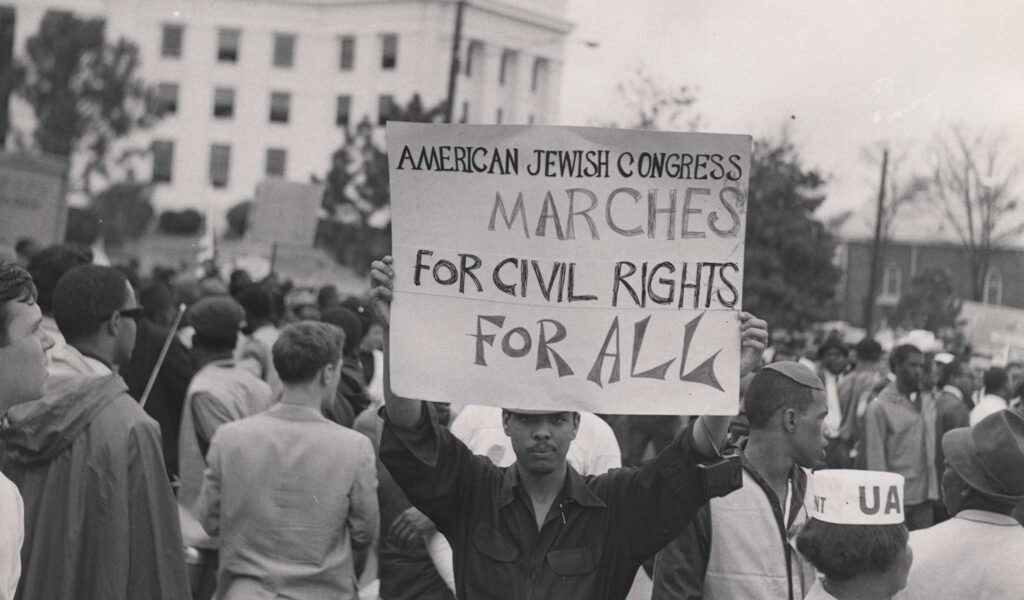
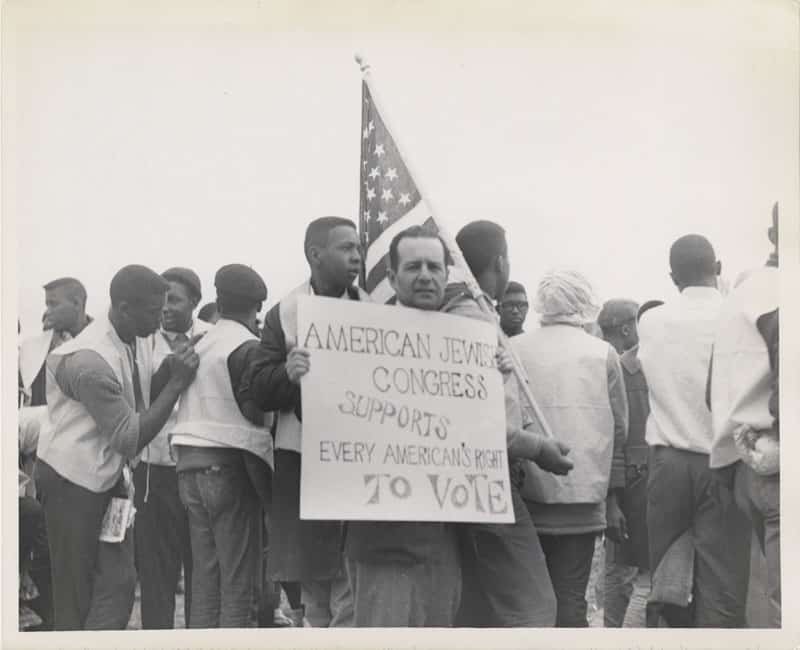
Black activist and American Jewish Congress member holding American Jewish Congress signs during the Selma-to-Montgomery March (1965)