
Years Of American Jewish Congress Work Validated In The Middle East. Regional Actors Coordinate With Israel And The United States.
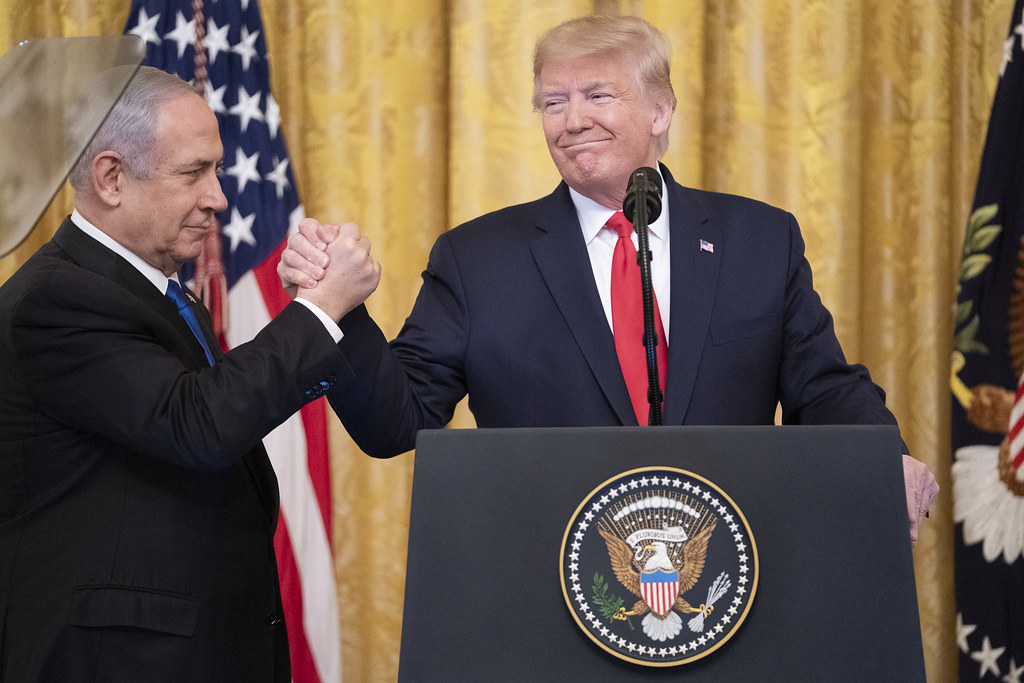
New York, December 29, 2025 – As President Trump and Prime Minister Netanyahu meet in Florida to decide the future of Gaza and the Middle East, Arab-Muslim partners prepare to support their next steps.
Indonesia confirmed an offer of 20,000 soldiers ready to deploy in Gaza. Secretary of State Marco Rubio revealed that Pakistan agreed to deploy its own troops. Both major Muslim states will coordinate with Israel and the United States.
American Jewish Congress President Daniel Rosen met leaders of both these nations in September. [Photos: meeting Indonesian President Prabowo and Pakistani Prime Minister Sharif].
Israel’s sacrifices after October 7, America’s robust diplomacy, and years of engagement in the region by American Jewish Congress [AJCongress] and others have helped regional partners move past Hamas and Iran’s reckless war in Gaza to shape a new reality.
Over the past three weeks, a quiet but consequential diplomatic convergence has taken shape. It signals a broader shift across the Arab and Muslim world away from Hamas and toward shaping Gaza’s post-war future.
On December 25, Jordanian Army Chief was in Islamabad for security talks. On December 26, UAE President Mohammed bin Zayed landed there. In parallel, leaders or senior political and military delegations from Indonesia, Jordan, Saudi Arabia, Egypt, Turkey, and Bahrain have passed through in rapid succession.
A clear sign that coordination over post-Hamas Gaza is now in high gear.
Secretary Rubio’s remarks on Pakistan were an unmistakable signal that Washington views these discussions on Gaza as operational and not just endless diplomacy.
What This Gathering Signals About Gaza’s Future
Taken together, this convergence reflects something new in the region: a growing bloc of moderate Arab and Muslim-majority states aligning around a shared conclusion and objective: Hamas cannot be part of Gaza’s future; aligning with Israel and the United States.
Several indicators underscore the shift:
- Indonesia has explicitly defended Israel’s legitimate security concerns following October 7, breaking with reflexive narratives that excuse Hamas violence.
- Jordan and Egypt, long anchored in regional security frameworks, are deeply engaged in planning mechanisms that prevent Gaza’s re-militarization.
- Gulf states are approaching Gaza through a reconstruction-first lens, conditioning recovery on Hamas’s exit, governance reform, and security guarantees, and prioritizing Palestinian reform, for once placing the onus on Palestinians to take responsibility for their actions.
- Despite the absence of diplomatic ties with Israel, Pakistan publicly condemned the targeting of Israeli civilians on October 7 and has a history of occasional discreet coordination with Israel when regional stability required it.
We are normally skeptical of early positive signs, but we see problem-solving diplomacy taking shape – aimed at ensuring Gaza does not revert to a terror enclave once the fighting ends.
Why You Should Take Note
For Israel and the United States, this alignment matters because it expands the circle of potential partners willing to say—implicitly or explicitly—that:
- Gaza must be rebuilt without Hamas.
- Security control is non-negotiable.
- Reconstruction must serve regional integration, not perpetual resistance.
- Islamist militancy cannot be rewarded with political legitimacy.
These states – Arab and Muslim, moderate and pragmatic – represent the only plausible external coalition capable of supporting a durable Gaza reset after Hamas, with Israel’s support and American backing.
Our Work Validated: Years of AJCongress Engagement That Contributed To Enabling This Moment
This moment did not emerge in a vacuum.
Alongside American and Israeli diplomacy and action, the American Jewish Congress has, for years, cultivated dialogue, access, and credibility across these capitals – well before such engagement became politically fashionable:
- Over the years, AJCongress has maintained sustained engagement with Turkey, Jordan, Qatar, Saudi Arabia, the UAE, Bahrain, and Pakistan, building relationships grounded in security realism, regional stability, and mutual interests.
- In 2005, AJCongress Chairman Jack Rosen led early outreach efforts involving Israel and Pakistan, demonstrating that quiet channels could exist even without formal ties.
So, this is something more consequential: the slow assembly of a coalition capable of remaking Gaza, on Israel’s timeline and with American diplomacy. And, with it, hopefully remaking a region Hamas tried to burn down.
In the words of AJCongress President Daniel Rosen:
“It is encouraging to see the dividends of sustained engagement across the Middle East. American diplomacy makes outcomes possible, and President Trump and Special Envoy Witkoff are moving a region that has long frustrated skilled diplomats. We recognize the sacrifices of Israel’s soldiers in confronting a war imposed from seven fronts. AJCongress remains committed to advancing these shared objectives.”